Meet Cafe
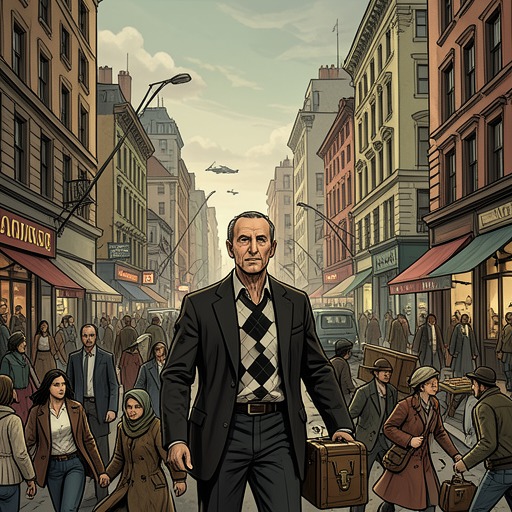
Naked LunchMeet Cafe is a dense social and commercial complex in the City Market, a place where the drug economy, bodily dependence, and the City’s improbable trades meet under one roof. Its kitchens, sleeping cubicles, perilous balconies, and underground baths make it less a single room than a compressed map of the surrounding world: crowded, porous, and continually exposed to forces arriving from elsewhere.
Setting and Structure
Meet Cafe occupies one side of the Plaza. Its maze includes kitchens and restaurants, sleeping cubicles, iron balconies, and basements that open into underground baths. The arrangement joins eating, lodging, commerce, and subterranean passage without clear boundaries; the Cafe is at once a public venue and a habitat for people living at the edges of ordinary civic life.
The Cafe belongs to a City where violence recurs, unattended dead are left to vultures, and people watch passersby from the streets with an ominous familiarity. Against that unsettled backdrop, it gathers an extraordinary range of trades and conditions. The place’s crowded interior gives the City’s scattered strangeness a common address, though not a common order.
Inhabitants and Economies
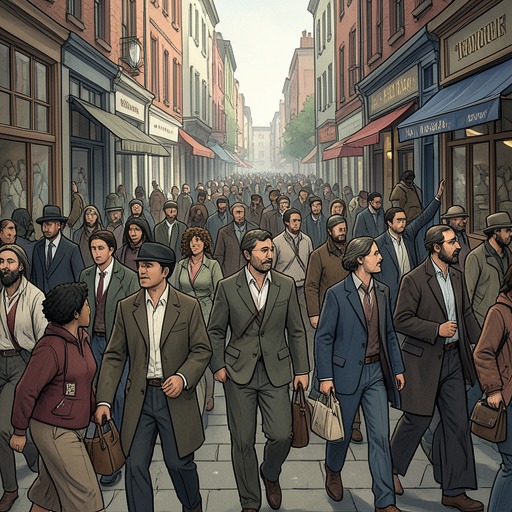
The Cafe’s clientele includes followers of obsolete trades, users of drugs not yet synthesized, sellers of souped-up Harmaline and substances associated with Latah, and dealers in Tithonian longevity serums. Other figures trade in dreams and memories, investigate spiritual offenses through fragmentary warrants, or work in the bureaucracies of spectral departments and unconstituted police states. Their presence turns the Cafe into a marketplace for both material goods and altered states of body and mind.
The drug economy in this setting extends beyond a straightforward exchange between seller and customer. Across the wider network, users are connected by a shared dependence that carries them through furnished rooms and into mornings of sickness; dealers and buyers can be found across cities and national borders. The Cafe’s sellers of exotic substances and precarious forms of relief belong to this same social circuitry, where need organizes encounters and the possibility of another dose can govern a person’s time.
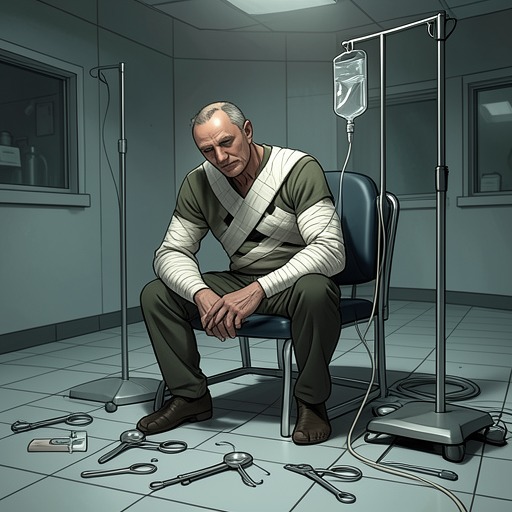
The scene also includes a practitioner who has perfected Bang-utot, described as a lung erection that strangles a sleeping enemy, alongside sellers of orgone tanks and relaxing machines and doctors treating diseases associated with ruined cities, the ocean floor, and the stratosphere. The range is deliberately unstable: medicine, commerce, violence, and speculative invention share the same venue, with no firm line between a remedy and another danger.
Mugwumps and Reptiles
Naked Mugwumps sit on white satin stools, sucking translucent colored syrups through alabaster straws. They have no liver and nourish themselves exclusively on sweets. Their purple-blue lips cover a black, razor-sharp beak, and they may tear one another apart in fights over clients.
The Mugwumps secrete an addictive fluid that slows metabolism and prolongs life. People addicted to that fluid are called Reptiles. Their bodies develop a fan of green cartilage behind each ear, covered in hollow, erectile hairs through which they absorb the substance. The fans also move in response to invisible currents and serve as a form of communication known only to Reptiles. Longevity here is not an escape from dependence: the substance’s life-extending effect is bound to an addictive economy and a transformed body.
The Cafe in the City’s Shifting Vision
The Cafe appears within a description explicitly associated with Yage intoxication. The accompanying notes describe images falling slowly and silently, a feeling that defenses have dropped away, and a beautiful blue substance flowing into the narrator. The room seems to become a Near Eastern brothel with blue walls and red-tasseled lamps, while the narrator’s perception of the body and surroundings shifts across racial and geographic images.
In that altered account, the room seems to vibrate with motion and to gather people, places, and imagined journeys into one experience. This framing makes the City and the Cafe more than a stable piece of geography: they are also forms through which the text renders perception under Yage, where borders between cultures, bodies, and environments appear to loosen. The Cafe’s defining image is therefore one of convergence without reconciliation—a busy meeting ground whose abundance of exchanges never resolves the city’s sickness, danger, or dependence.